




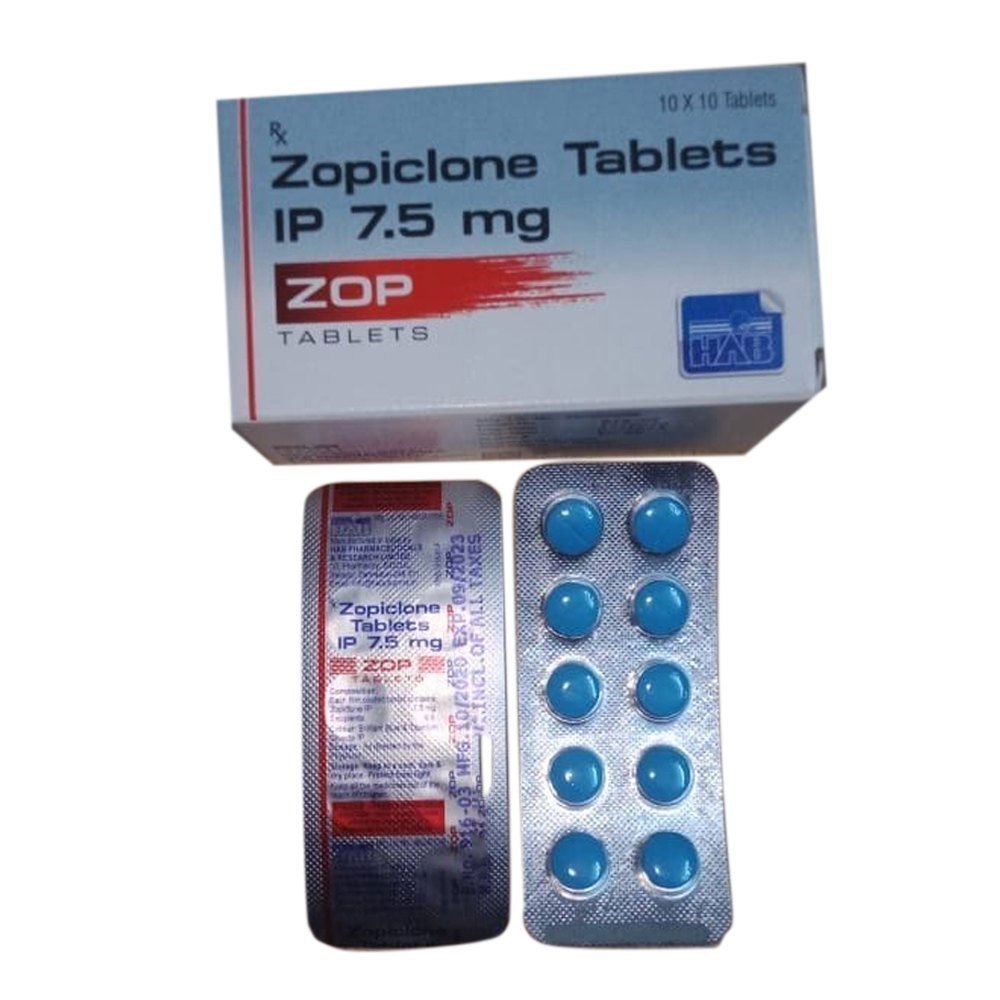
Zopiclone is a commonly prescribed short-term sleep medication used to treat insomnia, but the two standard strengths—3.75 mg and 7.5 mg—often create confusion. Understanding how these doses differ can help explain why doctors choose one over the other depending on the patient’s age, health condition, and sensitivity to sedatives.
What is Zopiclone?
Zopiclone belongs to a group of medicines called hypnotics (Z-drugs). It works by affecting brain activity to help you fall asleep faster, stay asleep longer, and reduce night-time awakenings. It is intended for short-term use only, usually a few weeks, because the body can develop tolerance and dependence over time.
The Two Standard Strengths: 3.75 mg vs 7.5 mg
Zopiclone is mainly available in two doses:
- 3.75 mg → low dose
- 7.5 mg → standard adult dose
The difference is simply the amount of active ingredient, but this significantly changes the strength of the sedative effect.
3.75 mg Zopiclone: The Lower Starting Dose
The 3.75 mg dose is typically used as a starter or reduced dose.
It is commonly prescribed for:
- Older adults (usually over 65)
- People with liver or kidney issues
- People with respiratory conditions
- Individuals sensitive to sedatives
Effects of 3.75 mg
- Milder sedation
- Less next-day drowsiness
- Lower risk of side effects such as confusion or grogginess
- May be enough for mild insomnia or first-time users
Doctors often start with this dose to see how the body reacts before increasing it if needed.
7.5 mg Zopiclone: The Standard Adult Dose
The 7.5 mg dose is considered the standard therapeutic dose for adults with insomnia.
It is usually prescribed for:
- Moderate to severe insomnia
- Adults with no major medical risk factors
- Short-term treatment of sleep disorders
Effects of 7.5 mg
- Stronger and faster sleep induction
- More effective for staying asleep
- Higher chance of side effects such as:
- Morning grogginess
- Metallic or bitter taste
- Dizziness or impaired alertness
This dose provides a more powerful sedative effect, but with increased risk of next-day impairment compared to 3.75 mg.
Key Differences Between 3.75 mg and 7.5 mg
1. Strength of Effect
- 3.75 mg: Mild sedation
- 7.5 mg: Strong sedation
2. Safety and Side Effects
- Lower dose = fewer side effects
- Higher dose = stronger sleep effect but more next-day drowsiness risk
3. Who It Is Used For
- 3.75 mg → elderly, sensitive patients, or starting treatment
- 7.5 mg → most healthy adults with insomnia
4. Clinical Approach
Doctors often follow a “start low, go slow” approach, increasing from 3.75 mg to 7.5 mg if needed.
Which Dose Works Better?
There is no universal “better” dose.
- If insomnia is mild or sensitivity is high, 3.75 mg may be sufficient.
- If insomnia is persistent or severe, 7.5 mg is usually more effective.
However, higher dose does not always mean better sleep quality—some people experience more grogginess and disrupted next-day functioning on 7.5 mg.
Important Safety Notes
- Zopiclone should only be used for short-term insomnia treatment
- It should be taken just before bedtime
- It can cause dependence if used long-term
- Avoid alcohol and other sedatives while using it
- Do not exceed the prescribed dose
The phrase “zopiclone 7.5 mg buy online uk” is commonly searched, but it is important to understand that Zopiclone is a prescription-only medicine in the UK. It should only be obtained through a licensed healthcare provider after proper medical assessment, not informal online sources.
Conclusion
The main difference between Zopiclone 3.75 mg and 7.5 mg is strength and risk profile. The lower dose is designed for safety and sensitivity, while the higher dose is the standard option for stronger insomnia treatment. The right choice always depends on individual health status, tolerance, and a doctor’s assessment.
